Architecture-first: why we solve the plan before the palette
Materials are easy to admire and hard to argue with — which is exactly why they shouldn't drive the conversation. Circulation, acoustics and activity must come first.
Materials photograph well. Plans don't. That is the quiet reason palette tends to colonise design conversations early — and why we resist it. A beautiful floor over a poor plan is just camouflage.
At ARCSPACEX, the first month of any engagement is spent on questions that look deceptively simple. Where does daylight enter? Where do people queue? Where will cables pool? How many calls will happen in parallel and how loud will they get? These aren't preferences — they're constraints. And the discipline of answering them before a material is chosen is what separates a workplace that works from one that merely looks good in the lobby.
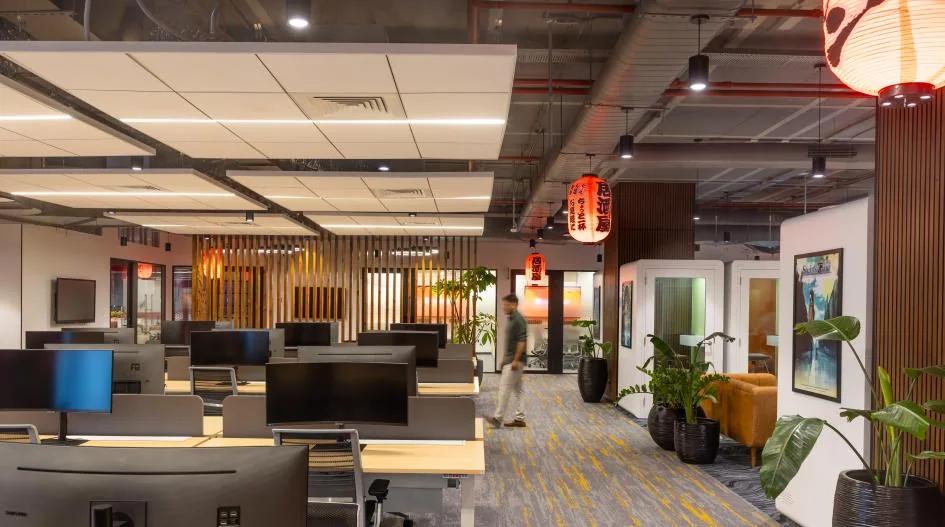
Infoservices Hyderabad — a plan organised around a central daylight corridor
The two kinds of problems
Every fit-out project contains two distinct classes of problem. The first are spatial — how the plan resolves circulation, zoning, acoustics, daylight and programmatic adjacencies. These problems are solved once, and their answers are almost impossible to undo after construction. The second are material — what the ceilings, floors, partitions, joinery and lighting look like. These are highly visible, highly emotional, and — importantly — almost completely independent of the first set of problems.
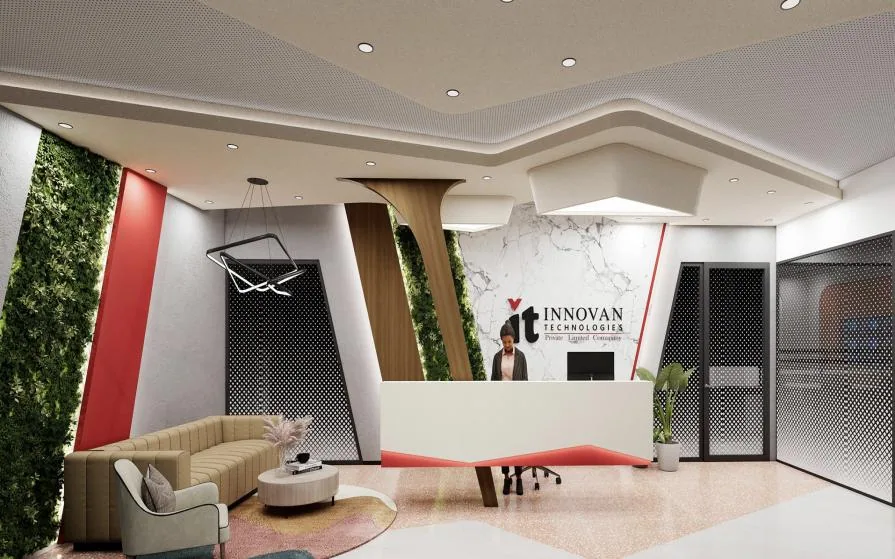
A good studio separates them. A poor one collapses them, and lets the mood-board decide the plan. The giveaway is projects where the reception looks magnificent but the open work area suffers a noise problem the acoustics couldn't have anticipated — because the acoustics were specified after the stone was chosen.
Three questions we ask before a material is discussed
1. How will 50 people on 50 different calls sound? Once you model concurrent speech, you discover that open-plan densities above ~1 person per 80 sqft need intervention — acoustic ceilings, soft furnishings, phone booths, masking — and those interventions have to be budgeted from the first BOQ, not retrofitted at week 10.
2. Where does natural light land at 3pm in August? Daylight is a workplace health benefit that compounds. A plan that puts focus desks in daylight and meeting rooms at the perimeter feels expensive and is almost free. A plan that reverses them is free and feels expensive.
3. What happens when the floor plate has to flex 40%? Every client underestimates growth. A plan that can't survive a 40% headcount jump without a refit is a plan that will be rebuilt in 24 months.
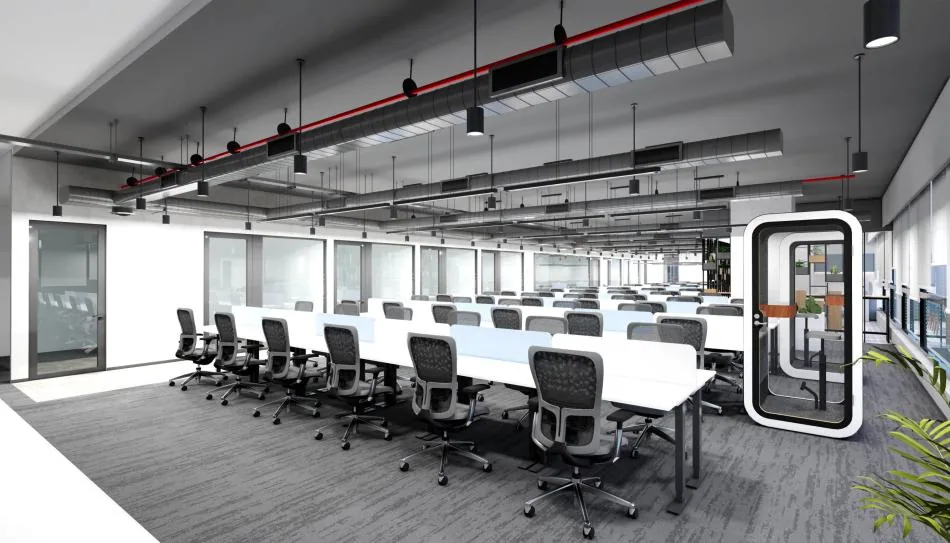
Innovan Technologies — a modular neighbourhood plan sized for 40% growth
Only when those answers are fixed does the palette get opened. And because the plan has already done the heavy lifting, the palette can afford to be restrained. That restraint is the difference between a project that dates and a project that endures.
Why this matters for design-build
Because ARCSPACEX delivers under a single design-build contract, the plan has to be right the first time. There is no architect-versus-contractor deflection when a problem surfaces on site — the studio owns both sides. That single-accountability model is the structural reason we push so hard upstream. Every hour of planning we do before a material is specified is two hours we don't have to recover on site.
If any of that sounds like the kind of studio you'd want on your next build, start a conversation with us. We'll respond within one working day.
09 / Begin
Ready to build something enduring?
From the first conversation to the zero-snagging handover — one accountable team, one contract, one standard.